
Application and Solutions for LVDT Position Sensors in High-Pressure Environments
ABEK SENSORS Jan 16, 2026
For most applications of linear variable differential transformer (LVDT) position sensors, standard LVDTs can meet operational requirements. However, in certain specialized high-pressure environments, more stringent conditions demand enhanced protection and adaptability from LVDTs. This necessitates design considerations and customized modifications tailored to specific application scenarios. This article focuses on various high-pressure applications, detailing LVDT adaptation solutions and corresponding strategies.
Typical Applications of High-Pressure LVDTs
Servo valves, drilling equipment, high-pressure pumps, are typical devices where high-pressure LVDTs are used for displacement measurement. In such scenarios, high pressure represents the primary risk factor affecting LVDT operation stably: excessive pressure may directly compress the sensor body or compromise the sensor's sealing structure, allowing moisture or other media to infiltrate internally. Once these substances infiltrate the circuitry or winding areas, they readily cause short circuits and burnouts, ultimately resulting in LVDT failure. It is important to note that LVDTs have a relatively low failure pressure threshold—in some operating conditions, failure can occur at just 0.5 MPa. Furthermore, this failure threshold varies depending on environmental factors such as medium type and temperature, as well as the specific application scenario.
Three Solutions for High-Pressure Environments
To address the impact of high-pressure conditions on LVDTs, three primary solutions are typically employed. The selection must comprehensively consider the actual pressure rating, installation space constraints, and overall application compatibility requirements to ensure the solution's reasonableness and feasibility.
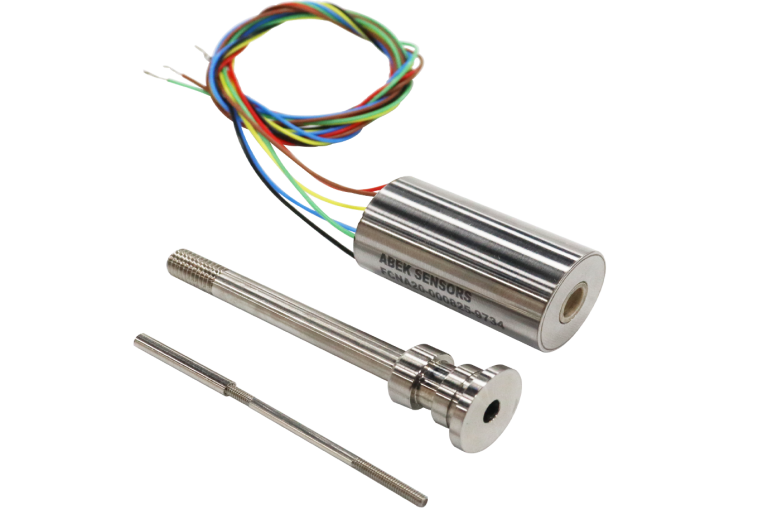
Option 1 - Standard LVDT + Pressure Sleeve
This solution employs standard LVDT products (e.g. FCNA20 series large-bore sensors) with pressure resistance achieved through custom insulating pressure sleeves or welded protective structures. In the protective structure design, the LVDT core must move within the weld seam, while the isolation tube must be made of non-magnetic material to prevent interference with the LVDT's magnetic field detection accuracy. This solution is widely applied in equipment such as hydraulic servo valves for drilling, fracturing, and mining operations, as well as heavy-duty hydraulic valves for gate panel detection.
However, this solution has seen limited adoption in practical applications. Essentially, it requires users to address high-pressure protection challenges themselves, not only increasing operational costs but also shifting responsibility for equipment failures and potential risks stemming from inadequate protective structure design onto the user. Therefore, for extreme high-pressure environments, it is strongly recommended to engage experienced manufacturers for customized solutions to ensure equipment compatibility and operational safety.
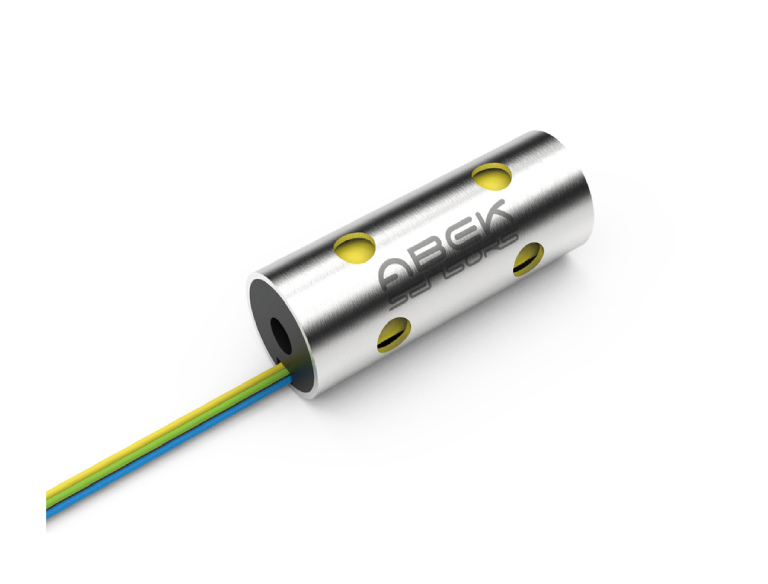
Option 2 - Open-Hole LVDT
Open-hole LVDTs achieve pressure equilibrium between the interior and exterior by incorporating through-holes in the body, thereby preventing high-pressure compression damage to the assembly. For example, the FCXA10 series can withstand high pressures up to 200 MPa.
This design has clear environmental limitations, being applicable only in non-conductive fluid environments or high-pressure gas scenarios without fluids (such as high-pressure air or inert gas environments). It strictly requires avoiding the risk of short circuits caused by the intrusion of conductive media.
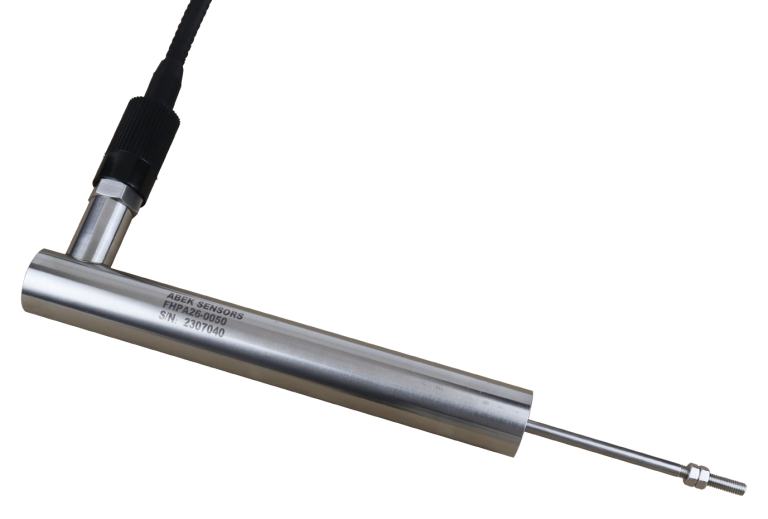
Option 3 - Custom Reinforced LVDT
Reinforced LVDTs are fully customized solutions tailored for specific high-pressure applications, primarily featuring two structural designs: The first employs a double-layer sleeve configuration, where the inner tube with windings is embedded within an outer sleeve. Both ends are encapsulated with epoxy resin sealing, with the outer sleeve providing both sealing integrity and structural strength. The second design utilizes a welded structure, suitable for extreme high-pressure scenarios involving water and corrosive media.
Welded LVDTs are typically manufactured using thicker, high-strength materials. While this results in increased equipment weight, wall thickness, and manufacturing costs, along with a larger overall dimensions, the structure offers superior strength. It can withstand extreme pressures exceeding 35 MPa, ensuring long-term stable operation under demanding conditions.
Conclusion
In summary, LVDTs can be adapted to extreme high-pressure environments through rational structural design or customized modifications. During the selection process, it is essential to prioritize identifying key information such as the pressure rating, medium type, and installation space for the specific operating conditions. This enables the determination of highly compatible solutions that remain within budget constraints. Only by doing so can long-term stable operation of LVDTs in high-pressure environments be ensured, thereby avoiding the high repair costs and production interruption risks associated with equipment failure.
ABEK SENSORS designs and manufactures position sensors for harsh environments. If you have any difficult position measurement questions, please contact us!
Fill out the form and our technical engineer will contact you. Or you can reach out us via tel 400-013-6886 or email info@abeksensors.com.