
Application of LVDTs in Rock Triaxial Tests
ABEK SENSORS Mar 25th, 2026
In the field of rock mechanics testing, rock triaxial tests serve as a core method for investigating rock mechanical properties, supporting engineering design, and conducting scientific research; meanwhile, the precise measurement of displacement and strain is a critical factor in ensuring the reliability of test data. As high-precision displacement/strain measurement sensors, LVDTs (Linear Variable Differential Transformers) have been widely adopted throughout the entire rock triaxial testing process due to their high measurement accuracy, excellent stability, and superior resistance to interference, serving as the core measurement components that link test loading with the calculation of mechanical parameters. ABEK SENSORS’ FCXA10 series of miniature LVDT sensors can directly measure minute axial and radial strains on test specimens. With a temperature resistance of up to 200°C and a pressure resistance exceeding 140 MPa, these products are suitable for a wide range of complex testing scenarios.
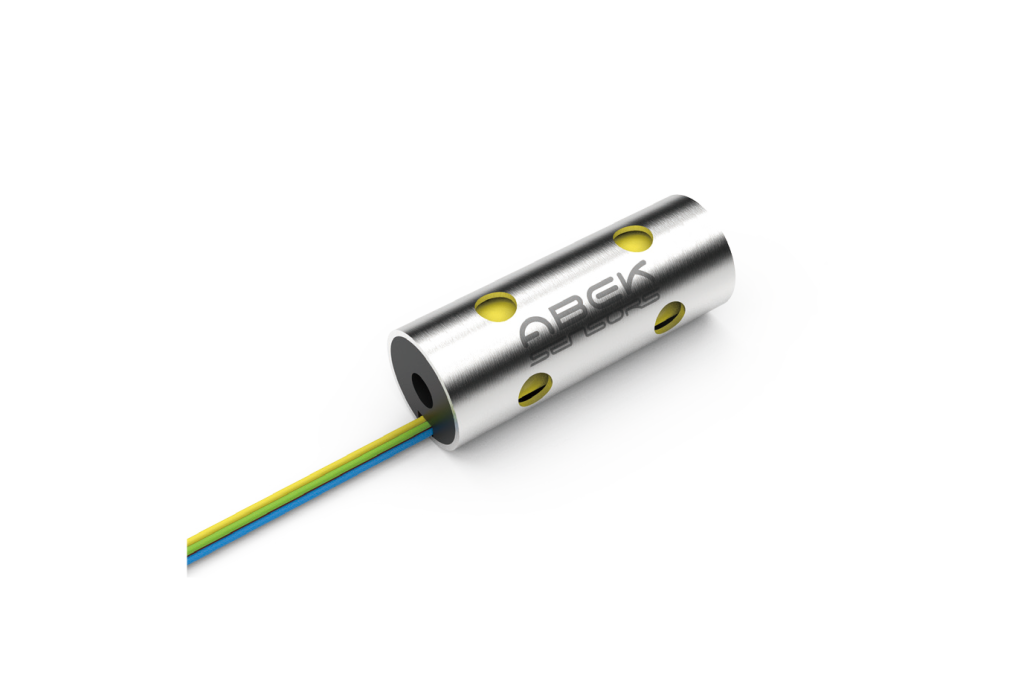
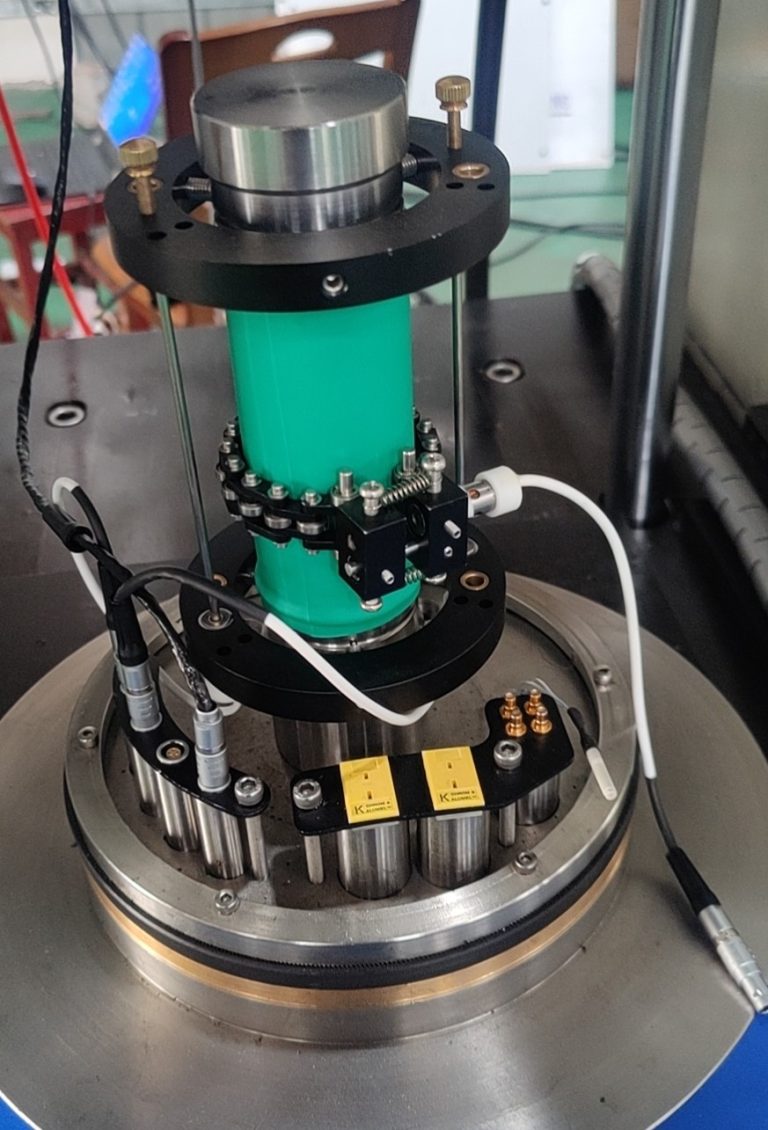
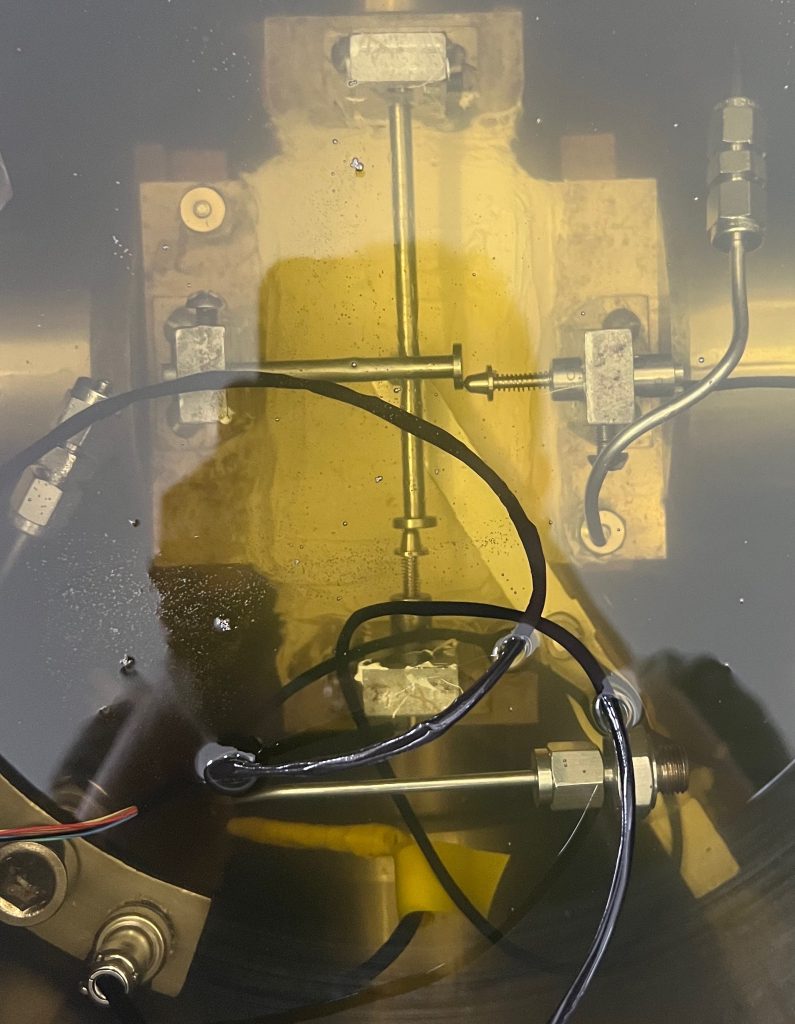
Precise measurement of axial and radial displacement/strain in rock specimens
The primary objective of rock triaxial testing is to determine the stress-strain relationship of rock under varying confining pressures and axial loads; precise measurement of displacement and strain is a fundamental prerequisite for achieving this objective. LVDT sensors can be directly mounted on test specimens or testing equipment to enable real-time, continuous measurement of axial and radial displacement and the corresponding strain. This effectively addresses the issue of insufficient accuracy in conventional measurement methods and ensures the reliability of test data.
In axial displacement measurements, an LVDT sensor is mounted between the loading end of the triaxial testing machine and the specimen cap, or directly attached to the axial surface of the specimen. This allows for real-time capture of the specimen’s axial extension or contraction under axial compression. Combined with the specimen’s initial length, this data can be used to calculate the axial strain. Compared to traditional displacement measurement methods, the LVDT can accurately capture minute axial displacements (with a minimum measurable displacement down to the micrometer level). It is particularly suitable for testing in the small strain range, accurately reflecting the subtle deformation characteristics of rock prior to yielding, and providing precise data support for the calculation of key mechanical parameters such as the elastic modulus and Poisson’s ratio of rock.
In radial displacement measurements, by mounting LVDT sensors symmetrically on the sides of the specimen, it is possible to monitor in real time the specimen’s radial expansion or contraction under the combined effects of confining pressure and axial pressure, thereby calculating the radial strain. In rock triaxial tests, radial deformation of the specimen is often minimal and prone to interference from factors such as test apparatus constraints and friction. The high-precision characteristics of LVDTs effectively mitigate these influences, accurately capturing minute radial deformations. This assists researchers in studying the volume change patterns of rocks under complex stress conditions and provides crucial data for analyzing the brittle and ductile failure characteristics of rocks.
Correction of Experimental Errors and Improvement of Measurement Accuracy
During rock triaxial testing, factors such as deformation of the testing apparatus itself, errors in specimen installation, and friction at the contact surfaces can all lead to deviations in the measured displacement data, thereby affecting the accuracy of the test results. By employing a targeted installation method, LVDT sensors can correct for testing errors, further enhance measurement accuracy, and ensure the reliability of the test data.
On the one hand, to mitigate the interference caused by plastic deformation of the testing apparatus (such as loading rods and bases), LVDT sensors can be directly affixed to the surface of the rock specimen, bypassing the areas subject to deformation. This allows for the direct measurement of the specimen’s own displacement changes, thereby avoiding the influence of apparatus deformation on the measurement results and ensuring that the acquired displacement data accurately reflects the rock’s actual deformation state. On the other hand, to address issues such as uneven specimen installation and insufficient contact between the specimen cap and the specimen, the LVDT can capture minute deformations of the specimen in real time during the early stages of the test. This helps test operator promptly detect abnormal displacements caused by installation errors, providing a reference for adjusting the specimen’s installation status and minimizing the impact of installation errors on subsequent test data.
Furthermore, for conventional rock triaxial specimens with an aspect ratio of 2, the ends are subject to significant constraints from the testing apparatus, while the central region remains largely unconstrained; conventional measurement methods struggle to capture the true local deformation of the specimen. By installing LVDT sensors in the central region of the specimen, precise measurements of local axial and radial displacements can be obtained, effectively eliminating measurement errors caused by end constraints and providing a reliable basis for determining the true modulus of deformation and strength parameters of the rock.
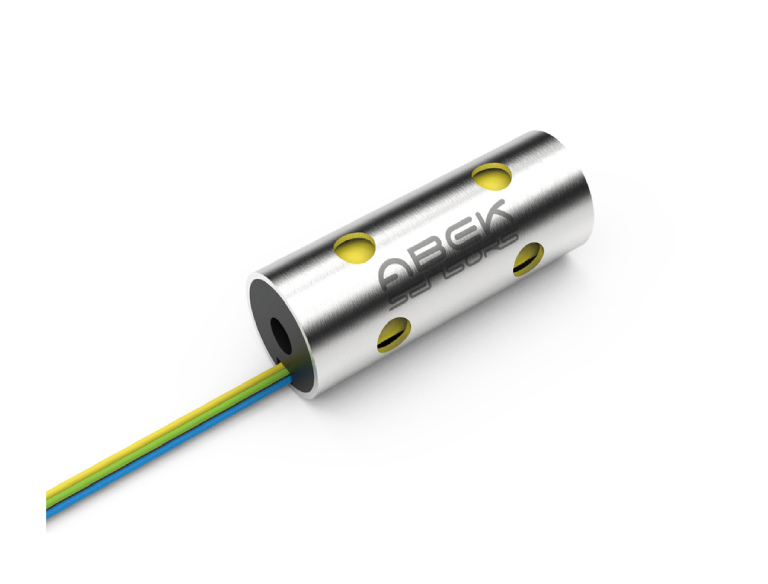
Adaptation for Special Testing Scenarios
In test scenarios simulating high-temperature, high-pressure environments—such as deep underground conditions, geothermal development, and nuclear waste disposal—sensors must meet increasingly stringent requirements for environmental adaptability. The ABEK SENSORS FCXA10 series LVDT local strain displacement sensors can withstand temperatures up to 200°C and pressures exceeding 140 MPa. They enable direct measurement of minute axial and radial strains on test specimens, making them well-suited for complex testing environments involving high temperatures and pressures, and providing stable and reliable measurement support for testing.
For example, in high-temperature, high-pressure triaxial tests, rock specimens are subjected to complex conditions of high temperature and high confining pressure. Conventional displacement sensors are susceptible to temperature-induced measurement drift and damage, whereas high-temperature-resistant LVDTs can maintain stable measurement accuracy under these conditions. They capture in real time the displacement and strain changes in the rock under the combined effects of temperature and pressure, providing precise measurement data for studying the mechanical properties of rock in high-temperature, high-pressure environments. Additionally, in dynamic triaxial tests, LVDTs can rapidly respond to dynamic displacement changes in the specimen, capturing in real time the deformation patterns of the rock under impact loads, thereby aiding research into the dynamic mechanical properties of rock.
Conclusion
In summary, the core value of LVDTs in rock triaxial testing lies in their ability to provide high-precision, real-time measurements of rock displacement and strain. By mitigating test interference, correcting measurement errors, and adapting to specific testing conditions, they ensure the accurate determination of rock mechanical parameters. This helps make the results of rock triaxial tests more closely align with the actual stress states of rock in engineering applications, thereby providing reliable experimental data support for engineering design and scientific research in fields such as underground engineering, resource development, and geological hazard prevention and control. The FCXA10 series LVDT local strain-displacement sensors, with their excellent environmental adaptability and measurement performance, can meet the measurement requirements of various rock triaxial testing scenarios, providing strong support for improving test accuracy.
ABEK SENSORS designs and manufactures position sensors for harsh environments. If you have any difficult position measurement questions, please contact us!
Fill out the form and our technical engineer will contact you. Or you can reach out us via tel 400-013-6886 or email info@abeksensors.com.